

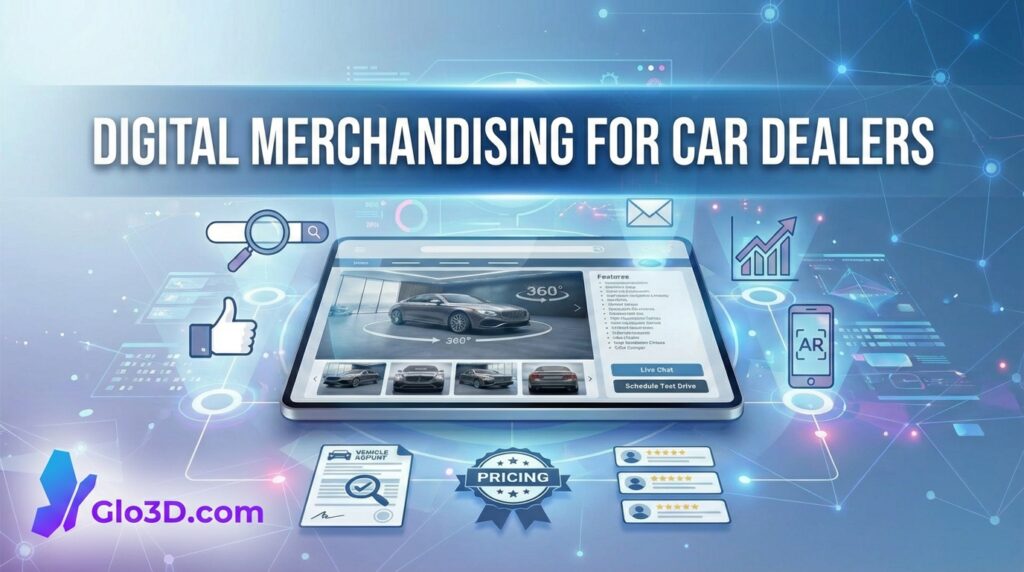
Digital Merchandising for Car Dealerships: How Inventory Presentation Drives Buyer Confidence
Digital merchandising for car dealerships focuses on how vehicles are presented online—through visuals, information, and consistency—to help buyers evaluate inventory with confidence before visiting the showroom. As most car buyers begin their journey online, strong digital merchandising plays a critical role in shaping first impressions and influencing purchase decisions.
Rather than managing the full transaction process, digital merchandising supports buyer decision-making by making inventory easier to understand, compare, and trust. When done correctly, it improves engagement, reduces uncertainty, and prepares buyers for more informed conversations with the dealership.
Key Takeaways
- Digital merchandising focuses on how inventory is presented online
- High-quality visuals and accurate information increase buyer confidence
- Consistent inventory presentation improves engagement and comparison
- Dealership websites play a central role in merchandising performance
- Digital merchandising supports—not replaces—in-store sales conversations
- Treating digital merchandising as a strategy leads to stronger results
What Is Digital Merchandising for Car Dealerships?
Digital merchandising for car dealerships is the practice of presenting vehicle inventory online in a clear, consistent, and visually compelling way. This includes vehicle photography, videos, descriptions, and the inventory structure across platforms. This approach supports transparency throughout the car-buying journey by helping buyers understand their options before they contact a dealer.
What Digital Merchandising Really Means for Dealerships
Digital merchandising is often mistaken for simply uploading photos or listing vehicles online. In reality, it requires a structured approach to inventory presentation that prioritizes clarity and consistency. When inventory lacks context or accuracy, buyers disengage. Strong merchandising helps address these issues and supports customer-first strategies that build trust before conversations begin.
How Buyers Evaluate Inventory Online Today
Today’s buyers aren’t browsing casually—they’re comparing options. Before contacting a dealership, shoppers want to review pricing, availability, and features through online car research. This behavior reflects how online buying has changed dealership engagement. From the buyer’s perspective, clear inventory presentation creates confidence. When vehicles are easy to evaluate online, hesitation decreases and readiness to buy increases.
Key Components of a Digital Merchandising Strategy
An effective digital merchandising strategy includes:
-
Clear and consistent inventory listings
-
Professional car photography for dealerships
-
Accurate vehicle descriptions and features
-
Organized inventory layout
-
Trust-building visual content
These components work together when supported by digital merchandising tools for car dealerships.
Website Experience and Inventory Presentation
Your website is where digital merchandising happens. If inventory pages are slow or cluttered, buyers disengage—often due to website problems that cost dealers sales. Improving inventory presentation starts with building a high-performing dealership website and maintaining it through ongoing website optimization that supports speed, clarity, and usability.
Inventory Merchandising & Visual Presentation
Inventory visibility directly affects buyer confidence. When vehicles are presented with high-quality visuals, accurate information, and consistent formatting, shoppers can more easily evaluate their options and move forward. Effective digital merchandising helps bridge the gap between online browsing and in-store buying by creating a clearer, more trustworthy viewing experience.
Visual quality plays a critical role in how buyers perceive inventory online. Following proven car photography best practices for dealerships can significantly improve engagement, while modern approaches such as creating professional vehicle photos using just an iPhone show that strong visuals don’t require expensive equipment. Together with the right digital merchandising tools for car dealerships, these elements help dealerships present inventory clearly and consistently across all channels.
Tools That Support Digital Merchandising
Digital merchandising is supported by tools that increase inventory visibility and maintain consistency across digital channels. Dealerships that perform well online understand that presenting inventory accurately across the platforms where buyers already search is essential to effective online car sales and buyer confidence.
Search visibility plays a major role in how inventory is discovered. By using Google Vehicle Listings, dealerships can display vehicles directly within search results, allowing buyers to view inventory details before ever visiting a website. For broader exposure, Google Vehicle Listing Ads help extend inventory reach while maintaining consistent merchandising across paid placements.
To manage scale without added complexity, automation tools such as Google’s Performance Max for auto dealerships help ensure inventory appears consistently across multiple Google channels. When merchandising data, visuals, and pricing are aligned across platforms, buyer trust increases, and the transition from online research to dealership contact becomes smoother.
Common Digital Merchandising Challenges for Car Dealers
Digital merchandising falls short when treated as a task rather than a strategy. Common challenges include:
-
Inconsistent vehicle photos
-
Missing or inaccurate information
-
Poor inventory layout
-
Low visual standards across listings
These issues often result in lost engagement and reduced trust—problems that strong merchandising practices are designed to prevent.
How Glo3D Supports Digital Merchandising for Dealerships
Digital merchandising depends on clarity, consistency, and trust—especially when buyers are comparing multiple vehicles online. Tools that support merchandising help dealerships present inventory with stronger visuals, more complete information, and a smoother browsing experience.
Instead of relying on static listings alone, dealerships can use merchandising-focused features to:
-
Keep shoppers engaged on inventory pages longer
-
Provide faster answers to common vehicle questions
-
Present vehicles with consistent visuals and details
-
Help sales teams work with buyers who are better informed before contact
When visual presentation, inventory consistency, and on-site support work together, dealerships create a more reliable inventory experience—leading to fewer unanswered questions and stronger buyer confidence before a visit.
Frequently Asked Questions
Does digital merchandising replace salespeople?
No. Digital merchandising improves how inventory is presented online, but salespeople remain essential for guidance, trust-building, and closing. The goal is to help buyers arrive better informed.
Can digital merchandising improve lead quality?
Yes. Clear visuals, accurate vehicle information, and consistent listings reduce confusion and increase buyer confidence—often resulting in more qualified inquiries.
Is digital merchandising the same as digital retailing?
No. Digital merchandising focuses on how inventory is presented (photos, details, consistency, and browsing experience). Digital retailing is broader and includes steps like financing, trade-ins, and completing parts of the transaction online.
What is the biggest digital merchandising mistake dealerships make?
Inconsistency. When photos, pricing, or vehicle details vary across listings and platforms, buyers lose trust. Digital merchandising works best as a repeatable standard—not a one-off task.
Final Thought
Digital merchandising plays a foundational role in how dealerships earn buyer trust online. By investing in clear inventory presentation, consistent visuals, and accurate information, dealerships support more confident buyers and better in-store conversations. As online research continues to shape purchase decisions, digital merchandising is no longer optional—it’s essential.
About the Author

Sean Toussi is the CEO and co-founder of Glo3D.com, a leading digital marketing and AI technology provider for the automotive industry. With extensive experience in emerging technologies, automotive retail, and digital transformation, Sean is widely recognized for his expertise in dealership innovation. He is also recognized for retail modernization. His insights have been featured in outlets such as Forbes, Digital Dealer Magazine, and UCD Magazine.
Sean is a frequent speaker at major automotive industry events, including NADA, NIADA, and NIAA, where he shares practical strategies on AI adoption, customer experience, and the future of car dealerships. Passionate about advancing the automotive ecosystem, he helps dealerships and industry leaders leverage technology to increase efficiency, improve customer engagement, and drive sustainable growth.


